When Art Learns a New Language
Artwork image
This artwork includes several images. A fuller slideshow view can be added here in a later release.

Artwork gallery
Supporting images are kept with their captions and descriptions, ready for a future slideshow experience.


Artist statement
I understand this reaction. Change often feels threatening, especially when it arrives quickly. But I believe the discomfort comes not from AI itself, but from our uncertainty about how to place it within our existing understanding of art.
Art has never been defined by its tools. It has always been defined by intention, context, and human experience. Brushes, cameras, digital software—each was once considered a disruption. Each was accused of making creation too easy, too mechanical, too detached from the artist’s hand. Over time, these tools did not erase art; they expanded it.
AI is no different.
The assumption that AI art requires no effort ignores the reality of the process. Creating meaningful AI-generated work still demands direction, refinement, patience, and vision. It involves choices—what to pursue, what to discard, what emotion or idea is worth shaping. A tool may assist, but it does not decide what should be said.
Copying and imitation are not problems unique to AI. They exist in every medium, including traditional painting and digital design. Removing AI from the conversation does not remove unethical practices. It simply shifts the focus away from responsibility and intention, where it truly belongs.
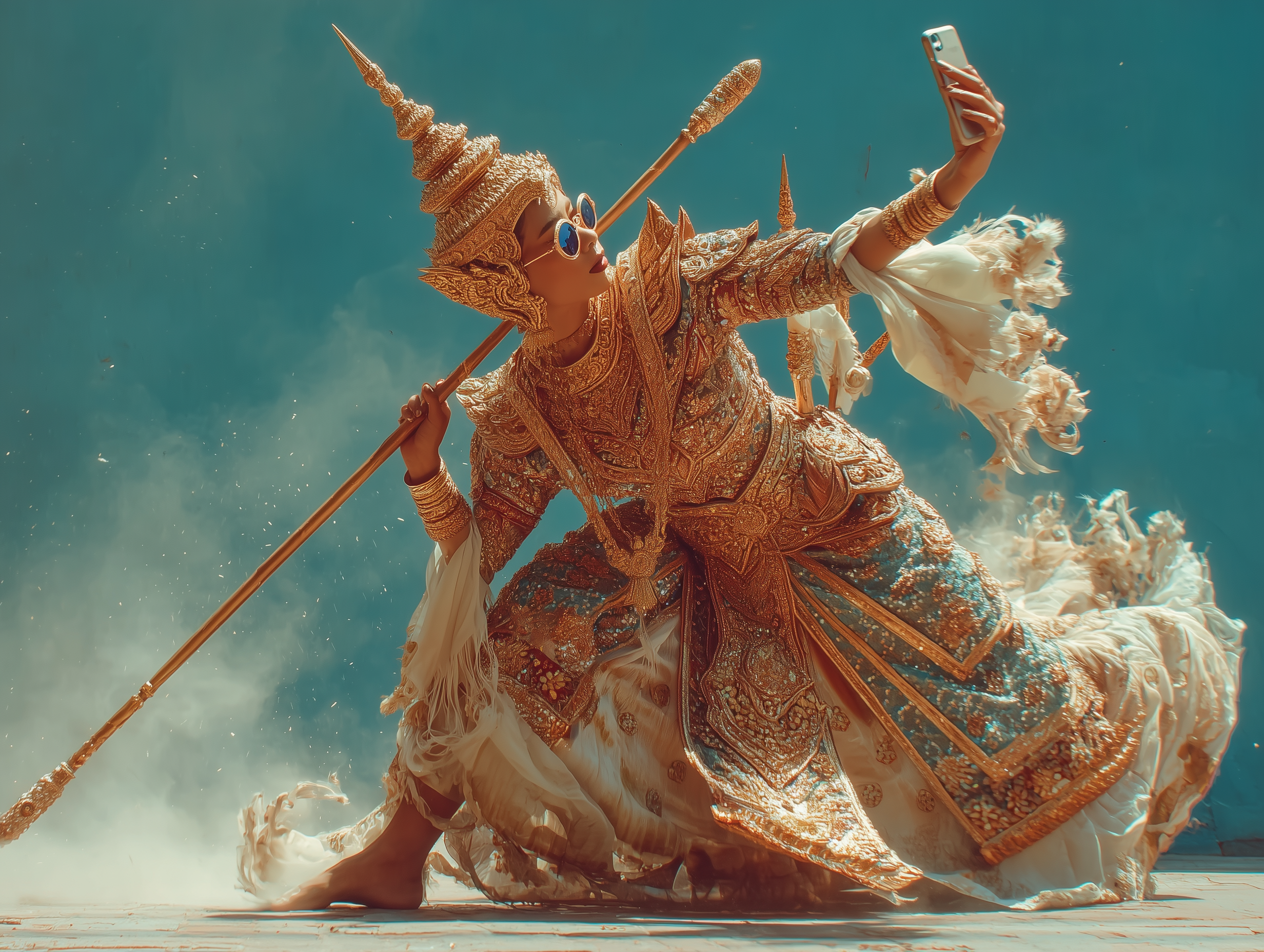
This body of work was inspired by something I encounter in daily life: cats sleeping inside small spirit houses. At first, the sight felt strange—almost inappropriate. But over time, it became familiar. The sacred meaning of the space did not disappear. It quietly adapted.
AI in art feels the same to me. It is not here to replace meaning, but to sit beside it—at first noticeable, then ordinary.
AI does not remove humanity from art. It reflects the humanity of the person guiding it. This work is not an argument against tradition, nor a defense of technology. It is simply a reflection of living through a transition.
Art evolves. And learning to coexist with that evolution is part of being human.


About the artist
I am Konkanya Thepveerakul, a Thai AI artist and visual storyteller working under the name GoldenChiArt. My work blends surrealism, symbolism, and contemporary AI-generated imagery, creating dreamlike worlds shaped by memory, emotion, and light. Although my subjects range from nature and mythology to everyday life and imaginative narratives, a recurring element throughout my work is the use of luminous gold textures inspired by childhood memories of Thai temples. The delicate shimmer of gold leaf has gradually evolved into a digital visual language that connects my cultural roots with contemporary AI art. In 2026, my artwork was selected as one of the 12 shortlisted pieces for Canvas of the Future at the AI for Good Global Summit in Geneva, where it was exhibited along Quai Wilson. I was also featured as an Artist Spotlight. These experiences reinforced my belief that deeply personal cultural memories can resonate with audiences far beyond their place of origin. Rather than recreating tradition, I seek to transform it into new visual experiences—where heritage, imagination, and artificial intelligence coexist.
Related works
Published works are selected with the same category or shared tags first, then recent gallery works.

When the Machine Learns to Dream: AI Art and the Culture It’s Creating
davidmillerart
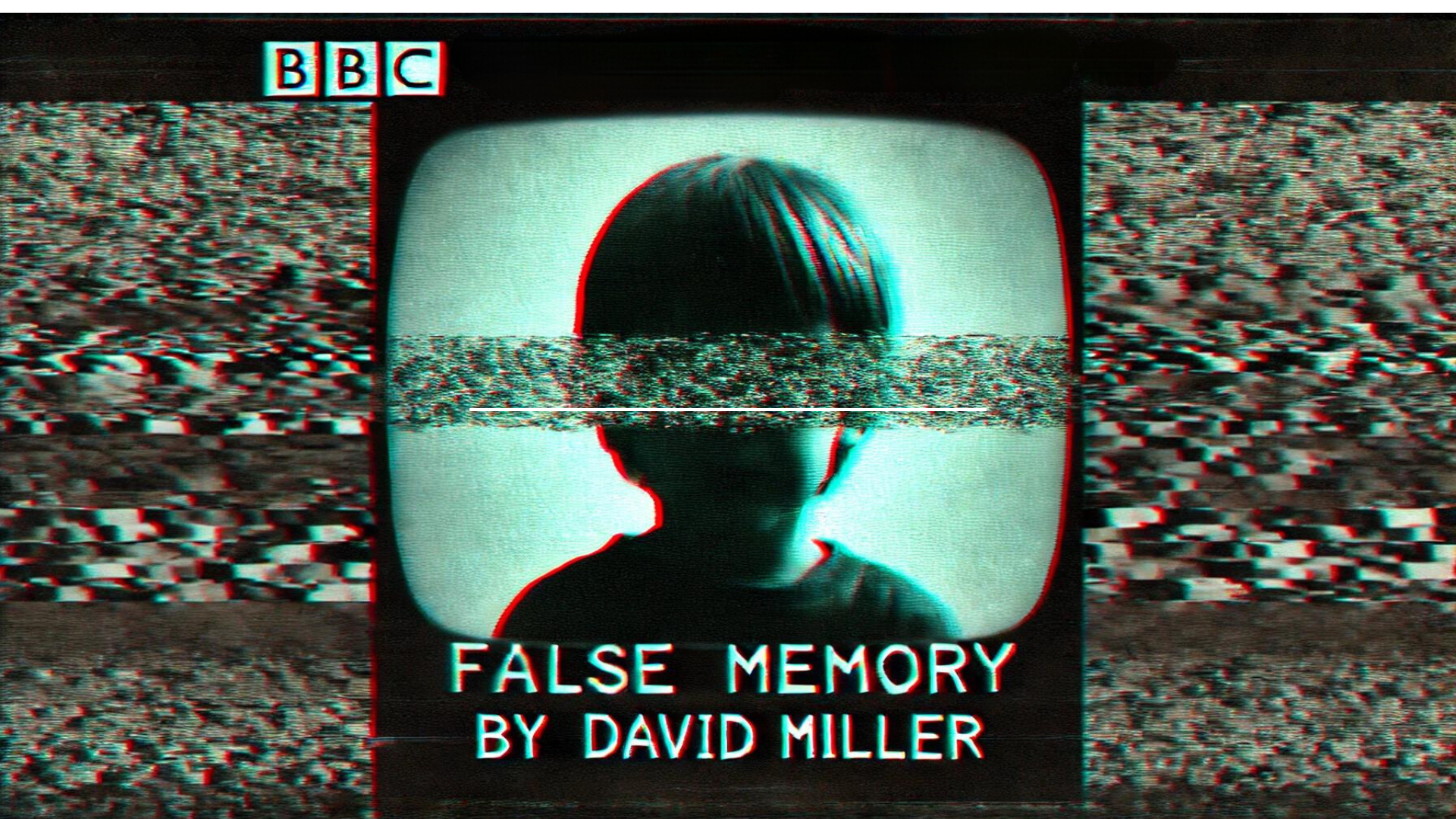
Blurring Reality: Exploring the Fragile Boundaries of False Memory Through AI Art
David Miller
